TRENDnet 24-Port Cat6A Patch Panel Guide: Where Every Room's Run Lands
Researched with AI · Being re-checked by the Operator

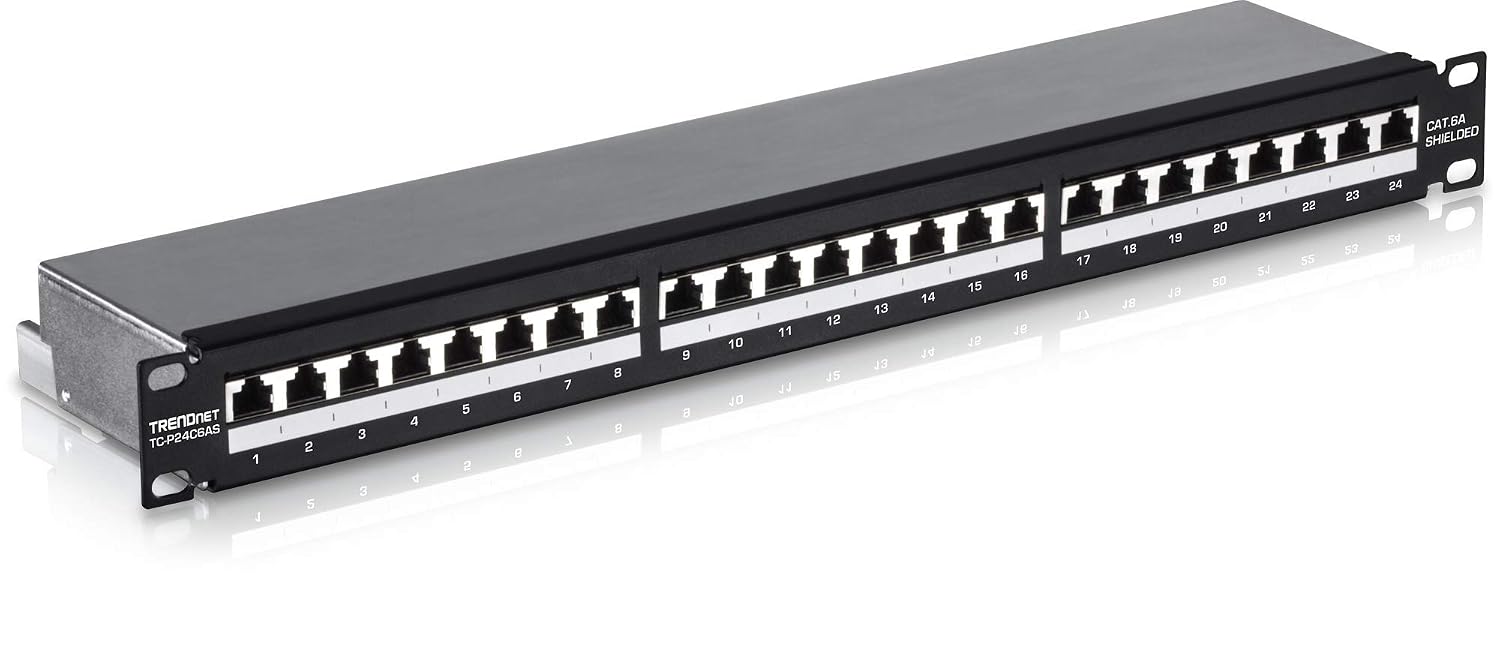 Researched pick · Researched with AI · not a hands-on review
Running every in-wall cable straight into the switch, one by one, works until the first time a run needs to be swapped, tested, or moved to a different port — then it means fishing through a bundle of identical cables with no labeling and no easy disconnect point. That's exactly the problem a patch panel exists to solve.
Every room's run terminates at this 24-port panel first; short patch cables then connect specific panel ports to the switch, so re-organizing the network never means touching the in-wall wiring again.
Specs
- Ports: 24-port
- Category: Cat6A shielded
- Form factor: 1U, 19-inch rackmount
- Compatibility: Cat5e, Cat6, and Cat6A cabling
- Labeling: Color-coded port labeling
Why it's the pick
Shielded construction matches the shielded bulk cable and patch cables already speced elsewhere in this section — mixing shielded cable with an unshielded patch panel undercuts the interference-rejection benefit of running shielded cable in the first place. Color-coded labeling matters more than it sounds like it would once a dozen or more rooms are all terminating at the same panel.
Where it falls short
24 ports is more than most homes will fill immediately — it's sized for room to grow, not minimum viable wiring, so it's a larger upfront investment than a smaller 8 or 12-port panel for a home that's only wiring a handful of rooms today. It also needs the 6U cabinet (or equivalent rack space) to actually mount — it's not a standalone accessory.
Who it's for
Anyone structured-wiring a full home with room to add more drops later — new construction, essentially always. For a smaller, fixed scope of just two or three rooms, a compact patch panel is a more proportionate buy.
Sources

Guides are researched with AI and checked by the Operator. How KYRA.GG works →