ASUS ZenWiFi ET9 Guide: The Mesh Node That Doesn't Fight Your Router
Researched with AI · Being re-checked by the Operator

 Researched pick · Researched with AI · not a hands-on review
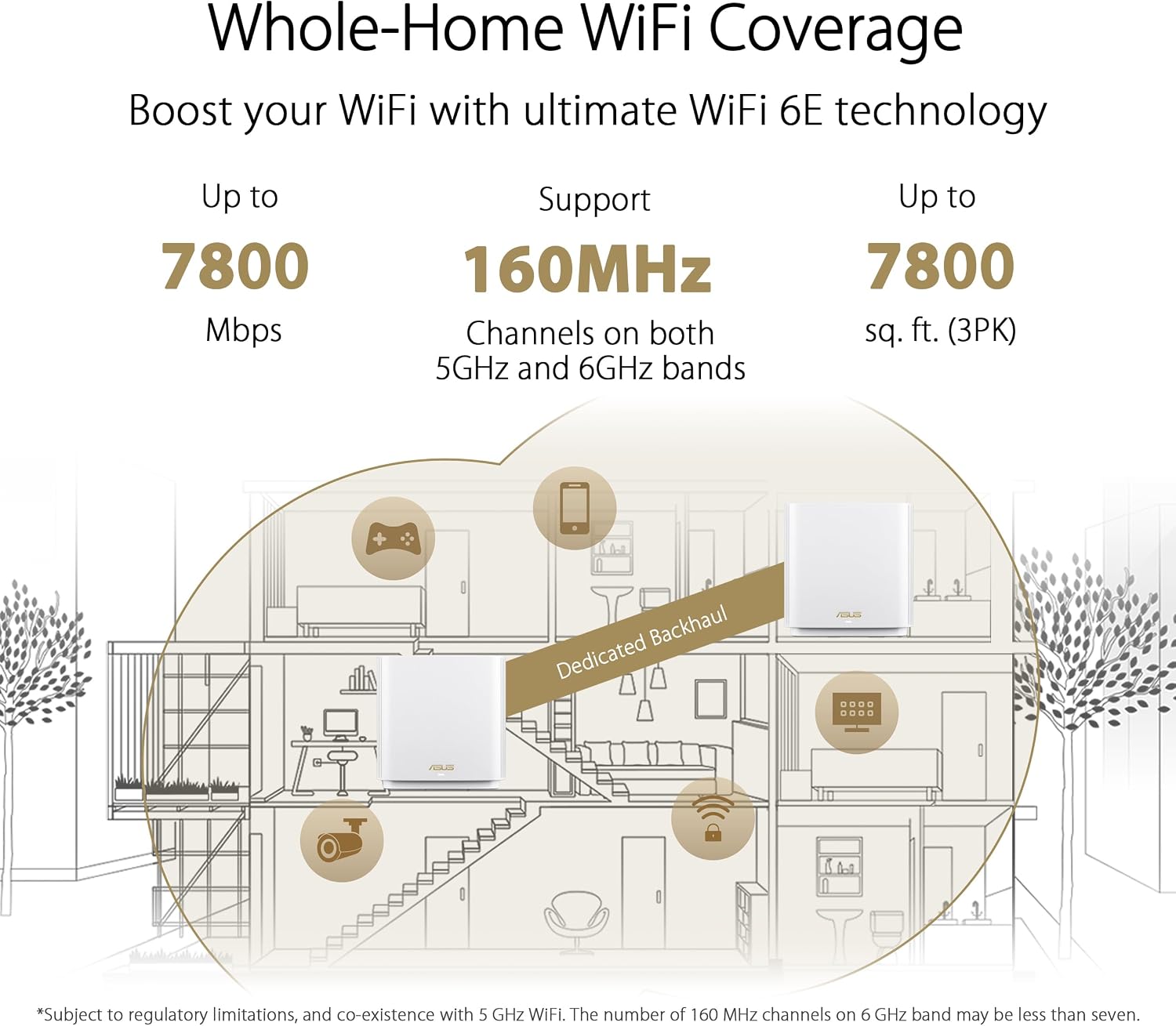
A single router, however powerful, still has a physical range limit — and a large home means dead zones somewhere no matter how good the hardware is. The fix isn't a stronger router, it's a second access point that acts like part of the same network instead of a competing one.
The ZenWiFi ET9 is ASUS's WiFi 6E mesh node, built specifically to extend an AiMesh-compatible router like the GT-AXE16000 rather than replace it — same network name, same app, one login.
Specs
- Wireless: Tri-band WiFi 6E, new 6GHz band included
- Coverage: Up to 2,850 sq ft per node (1-pack)
- Throughput: Rated up to 7800Mbps combined
- Mesh protocol: AiMesh — extends an existing ASUS AiMesh router's network
- Included: Lifetime free internet security, parental controls, easy setup via the ASUS app
Why it's the pick
The single biggest failure mode for mesh systems is picking a different brand than the primary router — that setup either forces double-NAT (two routers each trying to manage the network, one behind the other) or requires disabling half the primary router's features to hand off routing duties. AiMesh avoids this by design: the ET9 talks to the GT-AXE16000 as a genuine extension of the same network, not a second network bridged awkwardly onto the first.
Where it falls short
A single node covers roughly 2,850 sq ft — enough for most of a 3-4 bedroom home, but a larger or oddly-shaped floor plan may need a second node, which is a real added cost on top of an already premium router. It's also only worth buying if the primary router is AiMesh-compatible; pairing it with a non-ASUS router defeats the entire point.
Who it's for
Anyone who already has (or is buying) the GT-AXE16000 and has rooms or floors that router alone won't reach. If budget is the constraint rather than ecosystem consistency, a cheaper single-brand mesh kit will cover more square footage per dollar — it just won't share the same app or network as the router already speced for this build.
Sources
- Amazon.ca — ASUS ZenWiFi ET9 product listing
- SatelliteInternet.com — The Ultimate Guide to Starlink Mesh Networks

Guides are researched with AI and checked by the Operator. How KYRA.GG works →