Monoprice Cat6A Toolless Keystone Guide: No Punch-Down Tool Required
Researched with AI · Being re-checked by the Operator

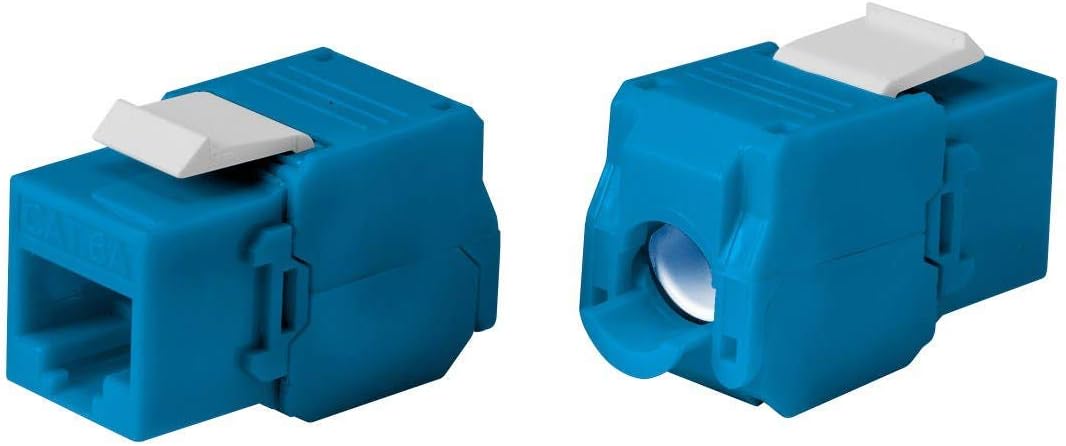 Researched pick · Researched with AI · not a hands-on review
Bulk cable is only half a structured-wiring job — the other half is terminating each run cleanly at the wall. A traditional keystone jack needs a 110-punch-down tool to seat the wires correctly; a toolless jack skips that step entirely.
Monoprice's Cat6A toolless keystone snaps the conductors into place by hand, then closes a cap over them — no specialty tool required, which matters a lot on a DIY structured-wiring job with a dozen or more jacks to terminate.
Specs
- Category: Cat6A
- Termination: Toolless, 180-degree entry
- Connector: RJ-45 keystone format — fits any standard keystone wall plate
- Compatible with: T568A/T568B wiring standards
Why it's the pick
The main risk in structured wiring isn't the cable — it's a bad termination at the jack, which is invisible until the connection starts dropping packets or capping speed under load. Toolless jacks reduce the most common failure mode (loose or miswired punch-downs) by making the correct termination the only easy way to close the jack, which matters more on a first DIY wiring project than on a professional install.
Where it falls short
Toolless jacks are generally rated for slightly fewer re-termination cycles than a proper 110-punch-down jack — fine for a one-time new-construction install, less ideal if a run needs to be re-terminated repeatedly over the years. They're also typically single-port; a room with two or three drops needs one jack per run, not one jack for the whole room.
Who it's for
Anyone terminating their own in-wall Cat6a runs without a punch-down tool on hand — which is most people doing this once, during a new build. A contractor running dozens of jacks across multiple projects may prefer standard punch-down jacks for the tool-based speed advantage at scale.
Sources

Guides are researched with AI and checked by the Operator. How KYRA.GG works →